 |
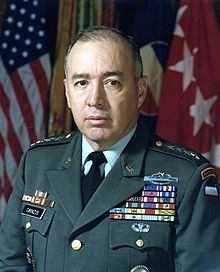
The following was written by General James E. Shelton (An operations officer in the First Division during the time Richard served as my commander). Here is a description of Richard Cavazos, taken from Shelton's book entitled "The Beast Was Out There".
"Lieutenant Colonel Dick Cavazos was battalion commander of the 1st Battalion, 18th Infantry (call sign: Dogface) through most of 1967. During the Korean War, he received a Distinguished Service Cross, second only to the Medal of Honor, for gallantry in combat as an infantry leader. He received his second Distinguished Service Cross as a battalion commander in combat in Vietnam. His Dogface battalion was the most highly acclaimed infantry battalion in the 1st Infantry Division in Vietnam. He retired from the army in 1985 as a four-star general, commanding all U.S. army forces in the continental United States. He was one of the greatest tactical combat leaders in the history of the United States Army.
The 1st Battalion, 18th Infantry (Dogface), with Dick Cavazos in command, figured prominently in the events leading up to the Battle of Ong Thanh. The Dogface battalion had established an NDP, which was identified on the map as Dai Yeu, on October 6, 1967, along the Binh Duong/Binh Long Provincial boundary south of the Long Nguyen Secret Zone. A 105/155mm firebase at Chonh Tanh on Highway 13 provided artillery support. The Dogface NDP -was situated on the crossing point of a network of trails, a main enemy line of communications. Determined VC attacks took place on the Dogface NDP at Dai Yeu on October 6. Cavazos also made some offensive probes into the jungle north of his NDP, which was about three kilometers south of the area where the Battle of Ong Thanh took place some ten days later.
On one of these probes, Cavazos used a scout dog to give advance warning of the presence of enemy troops in the area. The dog kept signaling that enemy troops were nearby even though none was apparent. After many warnings from the dog, Cavazos called a halt and directed his troops to conduct reconnaissance by fire in the suspect area. The reconnaissance by fire was immediately answered by a huge volume of enemy fire a veritable blanket of fire laid down on the area where the 1-18 Infantry was expected to proceed. In this way, Cavazos’s intuition, with the help of the dog, had allowed his battalion to escape the fate that later befell the 2-28 Infantry on October 17.
There has been speculation that if Dick Cavazos had been commanding the 2-28 Infantry on October 17, the battalion would not have suffered the fate it did. That may be true. Comparing Dick Cavazos to any of the battalion commanders in the 1st Infantry Division at that time would, however, be very difficult. Cavazos was a very special and different person. He was not the average infantry officer. For that matter, he was not really a recognizable product of the army’s officer commissioning and schools system. He had attributes that went far beyond the normal infantry lieutenant colonel. Cavazos had possessed realistic self-confidence; he was supremely confident of his own abilities and those of his unit to control events. He was not the type to trust others to assist him or his unit in carrying out its responsibilities. He was extremely aware of his command responsibility and therefore knew he had to control things and not leave the outcome to chance or to others. In most circumstances Cavazos was a team player, but not when exercising his command responsibilities. If he wasn’t sure he had a very good handle on the control of the operation, he would not get involved; that is, he would influence those in control either to do something another way or to give him control. He had the power to do that within himself. Dick Cavazos is a man of the earth; it shows in his intellect, his will, and his intuition. When he talks tactics, he gives personification to the military organization. As I watched him for a few moments, I could almost see him using his senses: looking, hearing, smelling, tasting, touching. His intuition was superb, and he commanded by intuition. He was not an inveterate planner, perhaps because he knew that too much study of the supposed circumstances might cloud his mind to the real situation when it occurred.
Cavazos was a wolverine; the epitome of the ferocious fighter, who was ready in every direction. He was also a bull—one who never lost a bullfight. According to tradition, when a bull survives a certain number of bullfights (he is not supposed to survive his first), his ability should be recognized, and he should live the rest of his years providing stud service and resting in the barn or pasture. That is Dick Cavazos. Cavazos believes that if he had not used his intuition and his five senses on October 6 at Dai Yeu, he would have found himself in the same combat situation that Terry Allen did on October 17. He also states that among the many attributes he was blessed with, he was also extremely lucky. Many feel they have been lucky to know him.
Prior to the death of Terry Allen, a major waiting to be promoted to lieutenant colonel and to take command of an infantry battalion in the Big Red One was sent to the 1st Battalion, 18th Infantry to study under Dick Cavazos. He was doing that when Terry Allen was killed. Subsequently this major replaced Terry Allen as battalion commander, 2-28 Infantry Black Lions. The major’s name was Lou Menetrey, and he too received a Distinguished Service Cross for bravery in a battle some three months after assuming command. Menetrey subsequently became a four-star general and commanded all U.S. and Allied forces in Korea. Dick Cavazos was certainly a man to emulate. In addition, his brother, Lauro, became the secretary of education in the Reagan administration and subsequently the Bush administration. The Cavazos’s are a family of achievers in the highest sense.
Reputation was another personal quality that Dick Cavazos had going for him. He was the standard for the division. All other commanders were measured and benchmarked against him. Dick Cavazos was not perfect, and he would be the first to admit that. At the time he was held up as the benchmark battalion commander in the 1st Infantry Division, he certainly was not about to present himself to the division commander and others as a leader who was less than they had described him. He liked being the benchmark. Unfortunately for many who admired Dick Cavazos, he was not the benchmark because he had studied the Fundamentals of Infantry booklet published by General Hay as the division bible. (Cavazos largely wrote the second version of that book immediately after leaving command of his battalion and on special assignment to the division G3 office.)
Working with him there was like being trapped in a small room with Genghis Khan after he had stepped down. Staff duty, especially sitting at a desk, writing, was not Cavazos’s cup of tea.) Cavazos’s personal leadership qualities were what set him apart from others, and others would have been foolish trying to duplicate them. He had a personal magnetism and an air of confidence in an earthy, infantry-like way that always placed him in the limelight, even when he didn’t want it. He made the most of that quality. Senior commanders would listen to him and let him do things that others might not dream of doing. Cavazos had that special something that other battalion commanders didn’t have.
In my opinion, if someone were to say that Cavazos could have succeeded that day at Ong Thanh where Terry Allen had failed (and Terry would have been the first to admit that he had failed), my response would be that Dick Cavazos would be as dead as Terry is today, given the same set of circumstances. Cavazos might, however, have been able to alter the circumstances prior to moving out that day to ensure that he was in better control. I doubt that he would have allowed the pressures of “getting a big kill” to cloud his mind to the reality of the situation and the real jeopardy that a moving force might encounter in the jungle.
By the time Terry Allen really understood his situation at Ong Thanh, his unit was decisively engaged. He probably hoped then that someone could bail him out. Cavazos was a master at not getting into those kinds of predicaments, largely because he didn’t do it, if he didn’t like the “smell” of it, and he had the power and presence to alter the circumstances.
Cavazos never followed instructions unless he essentially wrote them, and accomplishing that is no mean trick. There was a lot of badgering of commanders in the Big Red One. Cavazos was never badgered. He never lost a battle on the battlefield because he never lost a battle anywhere, even when those above him thought they had prevailed. If someone were to try to emulate Dick Cavazos as a commander, the best approach would be to study the essence of command responsibility.
Command responsibility means: “You got it. It’s yours.” No one can be allowed to take it away from you temporarily and then give it back. You are the master of your own destiny. It is your ship to sail. No one can keep you from your course. Command responsibility means a leader must do what he or she has to do to accomplish the unit’s mission. This does not mean ruthlessly crushing those around the leader in the process, but it also means not allowing fools and hangers-on at any level to affect the leader’s ability to do what he or she must do. Lastly, command responsibility means that the things that a leader does and that all that those who serve under the leader do—good or bad—are the leader’s responsibility. That was Dick Cavazos as a commander. Men of his cut are few and far between—anywhere. He was the kind of man that men would follow and men would die for. I believe that is still true today.
“Were there other Americans such as this one? Or was he one of a kind?” Louis Lamour, The Last of the Breed."
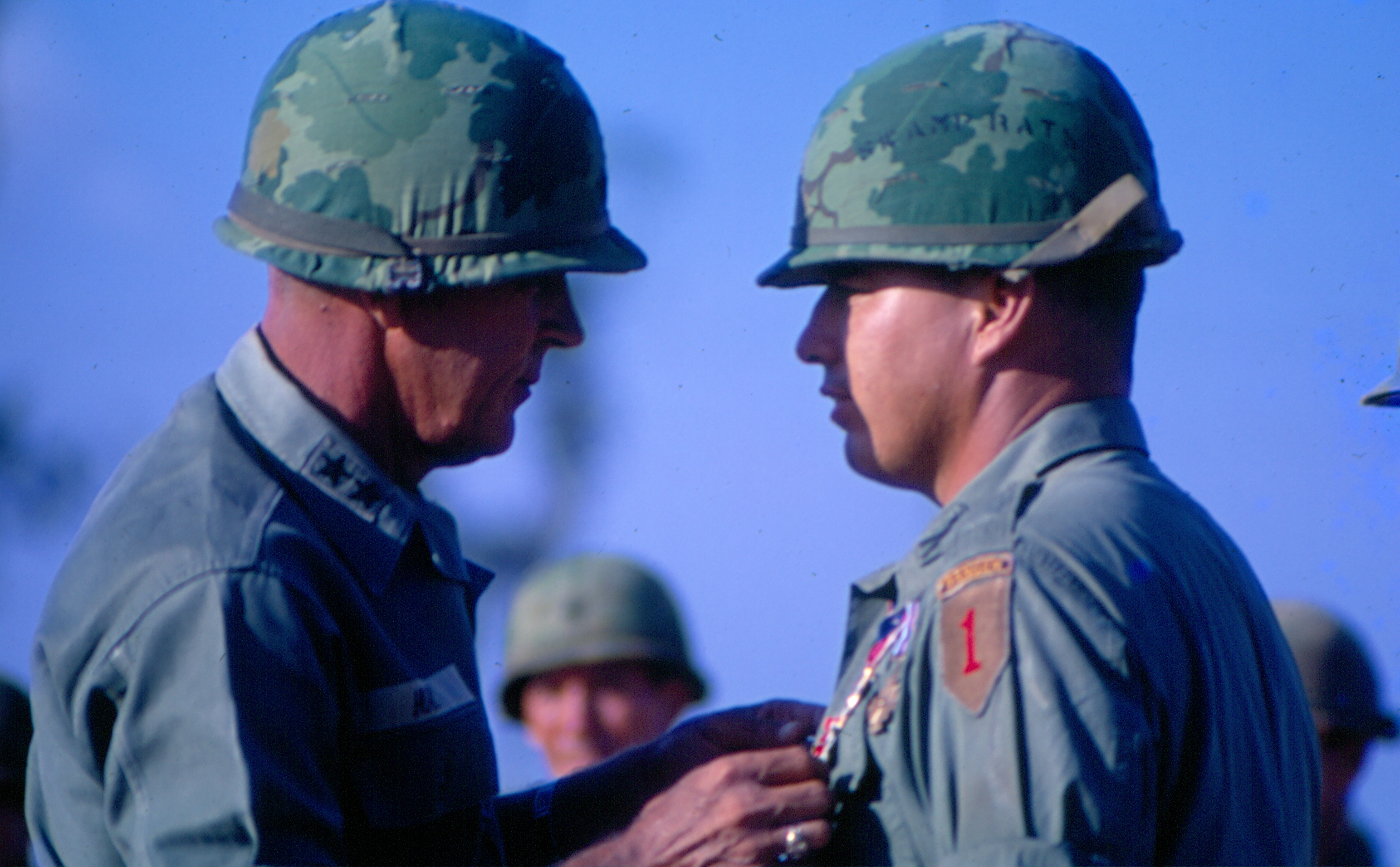 General Hay pinning another medal on Lt. Col. Richard Cavazos |
Norman Schwarzkopf, in his autobiography, gives credit to Richard as an instrumental mentor and boss. While Schwarzkopf was assigned to Fort Lewis, under the watchful eye of Cavazos, Norman learned valuable lessons that would serve him and the nation well later in his career. Richard, now commanding the entire continental Army of the United States suggested to Norman's boss that he chose Norman to lead the campaign in Grenada and the rest is history. That command became his stepping stone to becoming supreme commander of operation "Dessert Storm".
In a phone conversation several years ago, Richard described to me a meeting he had had with General Westmoreland, while serving as my unit commander in Vietnam. At this time he was a thirty eight year old Lt. Colonel. In the meeting, Westmoreland was getting input from his various field commanders on an upcoming operation. Richard said, “Everyone was crowding around Westmoreland giving nothing but positive feedback about the operation's plans while he, himself, was saying nothing”. Richard then said, “Westmoreland paused, looked squarely into his eyes, and said, “Dick, you are not saying anything”. Richard replied, “Sir I am just thinking about how many of my men are going to die during the performance of this operation.”( This statement really hit home with me since I was one of those men) Dick then said, "Westmoreland didn't have an answer to that".
Dick was not recanting to me a verbal barb he had thrown at "Ole Westy" as a way of ingratiating himself to one of his old veterans, while looking back through rose colored glasses. He knew I had already witnessed the truth of those words in his actions long ago or I would not be calling him after so many years had past. This great American had "many times over", not only displayed his deepest concern for his boys, but had also steeled himself with the uncanny ability to be capable of arming himself at the right moment with the right tactical decision to successfully match the fluid actions of a very elusive and deadly enemy. He brought us victory time after time where even other good leaders failed. Had anyone but Dick been in command of the 1/18th Infantry Battalion during those terrible months of 1967, I would never have lived to see my twenty first birthday. There are many others who can and will say the same thing if they are still alive today to say so.
In 1967, the
year I served under Richard, over 11,000 young men were killed in Vietnam, yet
my unit, the 1/18th, under Richard’s command, sustained relatively
few casualties, while participating in some of the largest operations of the
entire war. We were a part of Operation Junction City which was the largest
ground operation of the entire Vietnam Conflict. After reviewing statements made by Powell and Schwarzkopf, I am more
convinced, then ever, that it was the passing on of Richard’s selfless mindset,
concerning the welfare of the common soldier, that became a major factor in lowering the
casualties later in Iraq and Afghanistan. I also believe Richard became a remarkable role model for many of these later top
commanders. True concern for his fellow soldiers was imbedded in everything he
did, when it came to preparing to wage war against an enemy but he also had the
ability to
pick the right person for the job, and then trust them to get the job done. That
is a rare skill that few leaders possess. His ability in combat command showed in his
ability to communicate with supporting assets, his choice of equipment, his tactical awareness, and most of all his fearless
predisposition to lead from the front. It is an old truism which says it is impossible to lead others somewhere
you have never been yourself and Richard's Korean experience had taken him to
that place of unspeakable battlefield horrors more than once by the time his path crossed
mine. One time I ask him how he could have made so many right decisions during
so much confusion and chaos, when so many others failed. He simply replied,
"Wayne, "Vietnam was not my first rodeo".
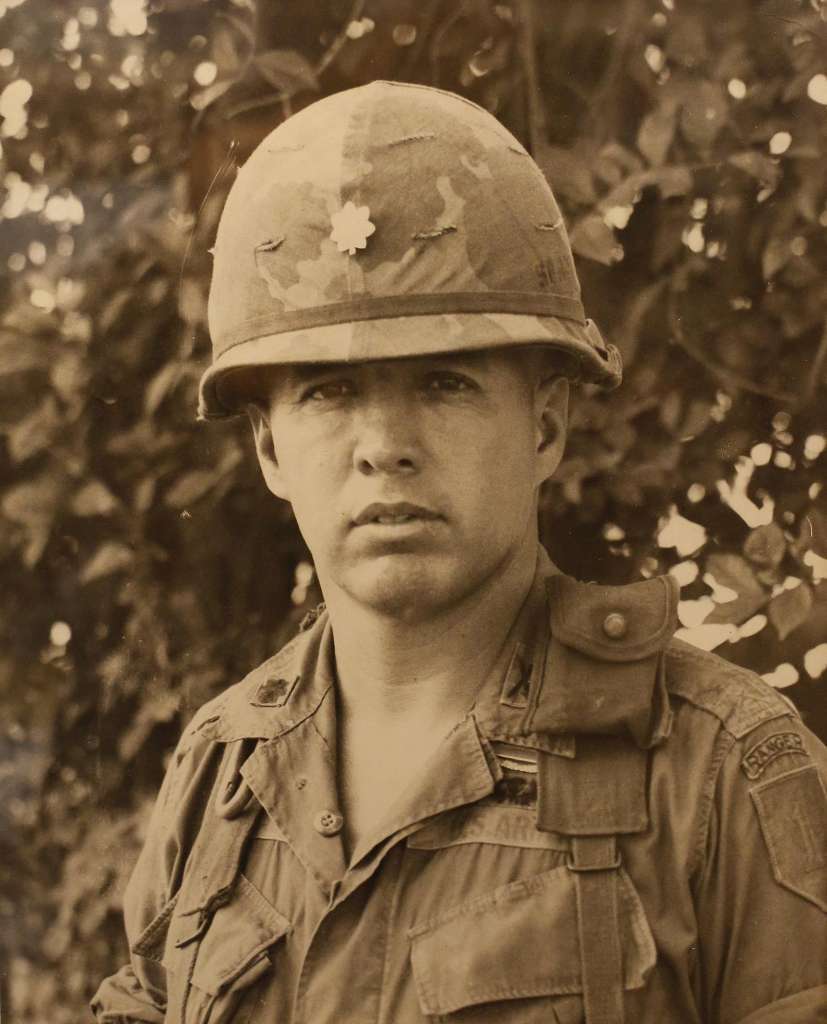
I am now convinced, more then ever, that Richard was very successful, late in his career, as a four star general, in projecting this rare combat leadership skill-set into the souls of many of the senior officers under him in a way which then took fire to greatly improve the Army command structure helping to shape it into the much improved fighting force that it is today. How can I be so sure of what I have just said? I am sure because I see that same demeanor in so many of those young men returning from Afghanistan, which I saw in those men I briefly served with under his command, in Vietnam. It's hard to put into words but every soldier who served under Richard knows what I am talking about, from the lowliest private to his second in command.
Wayne Wade
1-22-2010
Wade@Iam777.org
Call/Text:
713-446-8328
You Tube Videos of Richard's Funeral
https://youtu.be/NFDNxoielIwhttps://youtu.be/k8yBjhWPGPo
Richard's Obituary
http://www.legacy.com/guestbooks/sanantonio/richard-e-cavazos-condolences/187216960?cid=full